

Ceylon Cinnamon vs Regular Cinnamon: How Research Explains the Differences
Cinnamon is one of the most familiar spices worldwide, yet many people are unaware that “cinnamon” can refer to different botanical species. In research and quality discussions, cinnamon is often separated into two broad categories: Ceylon cinnamon and what is commonly called regular cinnamon, which usually refers to Cassia varieties.
Researchers study these distinctions because cinnamon type influences chemical composition, safety considerations, and how findings are interpreted across studies. This article explains how Ceylon cinnamon differs from regular cinnamon, what scientists examine when comparing them, and why these differences matter—without making medical claims or recommendations.
What Is Meant by “Regular Cinnamon”?
In most grocery stores, “regular cinnamon” typically refers to Cassia cinnamon. Cassia is not a single species, but a group that includes several closely related varieties, such as Cinnamomum cassia and Cinnamomum burmannii.
Cassia cinnamon is widely used in commercial food production and home cooking due to its strong flavour and broad availability. Because it is so common, many people assume all cinnamon is the same, even though research treats these varieties differently.
What Is Ceylon Cinnamon?
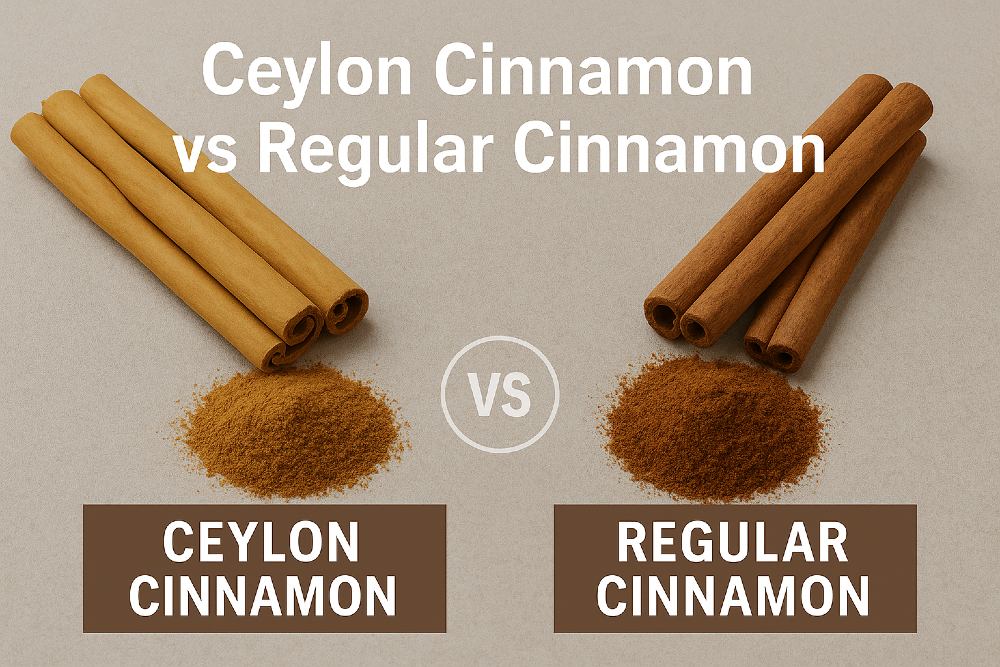
Ceylon cinnamon comes from the inner bark of Cinnamomum verum and is sometimes referred to as “true cinnamon.” It is primarily grown in Sri Lanka, with limited cultivation in other regions.
Researchers often describe Ceylon cinnamon as lighter in colour, milder in flavour, and more delicate in structure. These physical characteristics reflect underlying differences in chemical composition, which is why Ceylon cinnamon is frequently discussed separately in scientific literature.
Key Differences Researchers Examine
When comparing Ceylon cinnamon and regular (Cassia) cinnamon, researchers typically focus on several core factors:
- Botanical species and geographic origin
- Naturally occurring compound profiles
- Flavour and aroma characteristics
- Relevance in safety and intake-related research
These distinctions help explain why cinnamon type is often specified in studies, reviews, and regulatory discussions.
Chemical Composition and Research Interest
One of the most significant research differences between Ceylon and regular cinnamon involves chemical composition. While both contain aromatic compounds and polyphenols, their relative concentrations can vary.
Regular (Cassia) cinnamon generally contains higher levels of coumarin, a naturally occurring compound studied in the context of dietary exposure. Ceylon cinnamon typically contains much lower amounts, which is why it is often highlighted in safety-focused research.
To explore this topic further, see our article on Coumarin in Cinnamon: What Research Says.
Why Coumarin Differences Matter in Research
Coumarin is examined in research to understand exposure over time, not to label cinnamon as harmful. Because Cassia cinnamon contains higher concentrations, discussions about intake and long-term use often reference regular cinnamon specifically.
Researchers evaluating habitual or daily cinnamon use frequently differentiate between Ceylon and regular cinnamon to avoid misleading conclusions. Without this distinction, it becomes difficult to compare findings or interpret regulatory guidance accurately.
For additional perspective on daily-use considerations, readers may find our article Is Cinnamon Safe Daily? helpful.
Flavour, Aroma, and Culinary Use
Ceylon and regular cinnamon also differ in taste and aroma. Ceylon cinnamon is often described as mildly sweet and subtle, while Cassia cinnamon has a stronger, spicier profile.
These sensory differences influence how each type is used in cooking and food manufacturing. From a research perspective, culinary use patterns can affect overall exposure, which is another reason cinnamon type remains relevant in intake discussions.
Why Research Prefers Clear Species Identification
In scientific studies, clarity around ingredients is essential. Researchers prefer clearly identified cinnamon species so results can be replicated and compared across studies.
When cinnamon is listed generically, interpreting findings related to composition or safety becomes more difficult. This is why many research papers explicitly note whether Ceylon or Cassia cinnamon was used.
Quality Considerations Beyond Cinnamon Type
While species is a major factor, quality discussions also consider sourcing, processing, and testing practices. Two products labeled as the same cinnamon type may still differ in consistency and purity.
Researchers and quality experts often highlight transparency as a best practice. Clear labeling helps provide context for research-based discussions and supports more accurate interpretation of cinnamon products.
For a deeper look at quality indicators, see our Cinnamon Buyer’s Guide.
Common Misunderstandings About Cinnamon Types
One common misconception is that one cinnamon type is universally “better” than the other. Research does not frame the discussion this way. Instead, scientists focus on composition, context, and intended use.
Another misunderstanding is that all cinnamon products are interchangeable. In research, interchangeability depends heavily on species identification and quality controls.
How to Interpret Cinnamon Comparisons Responsibly
When reading cinnamon-related content, it is helpful to look for clear distinctions between Ceylon and regular cinnamon. Articles that treat all cinnamon as identical may oversimplify complex research.
Evidence-based discussions explain why researchers care about cinnamon type without telling readers what they “should” or “should not” do.
Final Thoughts
Ceylon cinnamon and regular cinnamon differ in botanical origin, chemical composition, and how they are discussed in scientific research. These differences explain why cinnamon type plays an important role in safety, quality, and intake conversations.
By understanding how researchers compare Ceylon and regular cinnamon, readers can better interpret evidence-based content and quality discussions. Anyone with personal health concerns or questions about supplement use should consult a qualified healthcare professional for individual guidance.


